AI chatbots are rapidly becoming part of everyday shopping behaviour. Increasingly, shoppers are asking tools such as ChatGPT and Google’s AI assistants for product advice before making purchase decisions.
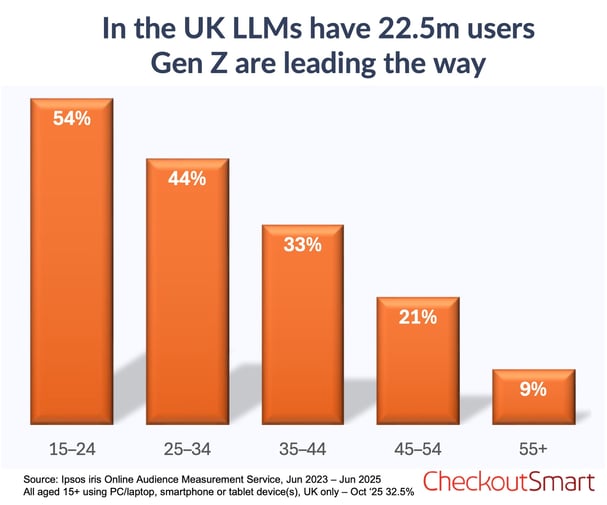
Recent estimates suggest that around 22.5 million people in the UK are already using large language models, with Generation Z leading adoption.
For FMCG brands, this raises an important question:
What answers are shoppers actually seeing when they ask AI for product advice?
To explore this, we analysed real prompts and responses from our AI User Consumer Panel. The findings highlight how AI is already influencing product discovery and why fresh information, particularly fresh reviews, is becoming increasingly important.
Five Key Takeaways
Before diving into the details, here are the key insights from our research:
- Shoppers ask far more varied and detailed questions in AI than in traditional search.
- AI answers typically mention only a small number of brands which has created a challenge with visibility.
- Category logic and specific shopper needs strongly influence which brands are recommended.
- Retailer websites often act as primary information sources for AI systems.
- Fresh reviews and up-to-date information strengthen AI recommendations.
What Shoppers Are Really Asking AI LLMs
One of the most striking findings from our research was the variety of questions shoppers ask within a single category.
Instead of simple queries such as “best yoghurt”, shoppers ask much more detailed questions:
- What is the healthiest yoghurt?
- Which yoghurts have the lowest sugar?
- What is the difference between Greek yoghurt, Skyr and natural yoghurt?
- Which yoghurt brands are available in UK supermarkets?
In one study alone, we collected more than 780 real prompts and responses about yoghurt from shoppers using AI tools.
This highlights an important behavioural shift. AI queries are more conversational and exploratory than traditional search. Instead of entering keywords, shoppers ask complete questions about ingredients, health benefits, taste and dietary suitability.
For brands, this means visibility across many different questions now matters far more than ranking for a single search term.
Visibility Is Much More Limited
Another major difference between AI and traditional search is the number of brands mentioned in answers.
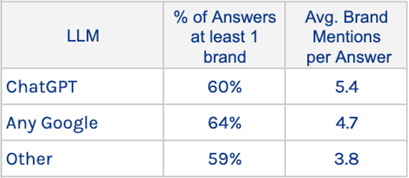 In the yoghurt responses we analysed, AI tools typically referenced only a small number of brands in each answer, on average just 4-5 brands.
This contrasts sharply with a traditional Google results page, which might display dozens of brands and links.
In AI-generated responses, if your brand is not included in the answer, you are effectively invisible. Understanding how those answers are generated is therefore critical.
The Yoghurt Case Study: Topics Drive Brand Visibility
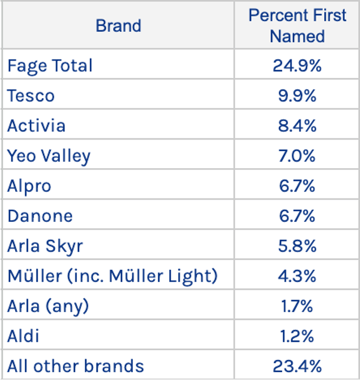
Looking more closely at yoghurt responses, Fage appeared most frequently in the AI answers we analysed, even though it is not the overall market leader in the category.
The explanation is category simple: Many shoppers were asking specifically about Greek yoghurt or thicker yoghurt styles, categories where Fage is strongly associated.
This reveals an important fact: Topics chosed by consumers lead to brands chose by LLMS.
If the conversation focuses on Greek yoghurt, certain brands naturally appear. If the question focuses on healthy yoghurt options, the AI may recommend a type of yoghurt, such as Skyr, rather than a specific brand. In other words, AI recommendations tend to follow category logic rather than market share.
Retailers Are an Important Source of Truth
Another interesting finding from the yoghurt research was the role of retailers in AI answers. Tesco appeared frequently in responses, particularly when shoppers asked about product availability or value. AI models often rely on structured and accessible information from retailer websites when generating responses.
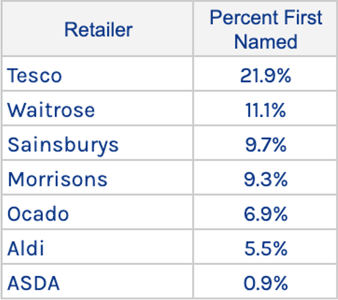
In many cases, retailer product pages effectively become sources of truth for how AI systems describe products and categories.
Face Cream Case Study: Winning the Need State
We undertook a similar analysis in another category: face cream and moisturiser.
Once again, shoppers asked a wide variety of questions, but most focused on specific skincare needs, including:
- Very dry skin
- Sensitive skin
- Non-greasy moisturisers
- Fragrance-free products
- Creams suitable under make-up
This highlights another important shift, brands are not simply competing to be the “best moisturiser.” They are competing to be the best answer to a specific need state.
Why CeraVe Appears So Often
In the face cream analysis, CeraVe dominated the responses, appearing in more than 40 percent of answers: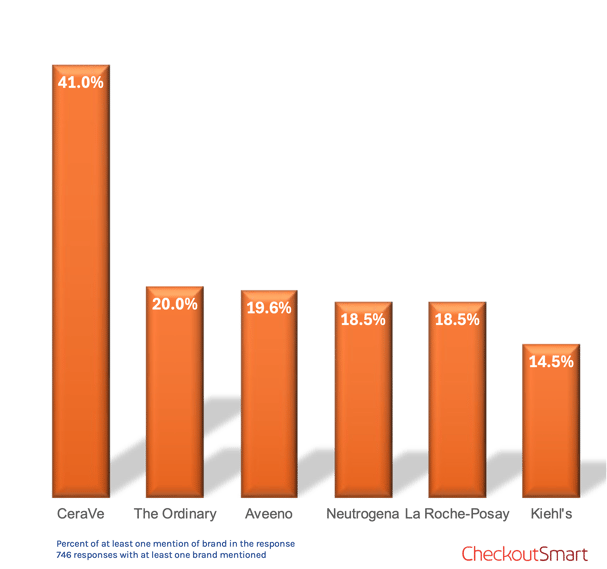
Several factors likely contribute to this visibility:
- Clear ingredient-led messaging
- Strong dermatologist endorsement
- Well-defined use cases such as dry or sensitive skin
- Wide availability across retailers
AI systems combine structured information, such as ingredients and product claims, with signals including consumer reviews and retailer presence.
Interestingly, traditional influencer marketing appeared to have very little influence on the answers generated.
Superdrug and Not Boots for Face Cream
Another notable outcome from the skincare analysis was the prominence of Superdrug in AI responses.
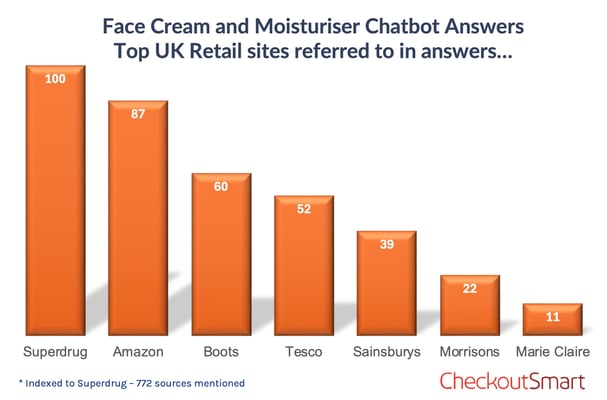 AI systems often rely on specialist retailers with strong category authority when answering skincare questions.
Superdrug’s website provides clear product categorisation, ingredient information and structured descriptions, making it easier for AI systems to interpret.
By contrast, some retailer websites are harder for AI systems to navigate and extract structured information from.
As a result, Superdrug appears more frequently in AI-generated explanations and recommendations.
Why Fresh Information Matters for AI
One of the clearest conclusions from the research is that fresh information matters.
AI answers frequently include statements such as: “Highly rated by users” and “Popular among shoppers”
Recent reviews strengthen the credibility of these recommendations.
Our broader analysis of supermarket reviews shows that reviews older than six months rapidly lose their impact, while fresh reviews significantly improve shopper trust and conversion.
In an AI-driven discovery environment, fresh signals help ensure brands remain visible in recommendations.
What Brands Should Do Now
AI-driven product discovery is still evolving, but several practical actions are already clear.
Brands should focus on:
- Understanding the full range of shopper questions in their category
- Aligning product messaging to questions with clear ingredients, benefits and use cases
- Structuring product information so AI systems can interpret it easily
- Maintaining a steady flow of fresh consumer FAQs & up to date product reviews
These actions increase the likelihood that a brand will appear when shoppers ask AI for product advice.
Want to See How Your Category Performs in AI?
This analysis is just one example of what we are now seeing through our AI User Consumer Panel and category research programmes.
We can run the same research for your category to show:
- The real questions shoppers are asking AI
- Which brands appear most frequently in answers
- Which topics drive visibility for your products
- Where competitors are outperforming you
- What actions will improve your AI visibility
In a world where AI responses often mention only a handful of brands, understanding this landscape early could create a significant competitive advantage.
To get AI Consumer Panel research for your category, get in touch.
Email sales@checkoutsmart.com to request a category analysis.